Electrocatalysis
Enhance catalytic reactions by forming bonds between a catalyst and an electrode — and optimize the pathways of the reaction you care about.
Boost sensitivity with enhanced resolution at every current range — from picoamps to full compliance, without switching instruments.
Interface, Reference, PAL Plus, Kolibrik and multichannel — plus bipotentiostats and EIS.
Explore →eQCM 15M and QCM-I instruments for nanogram-scale mass and viscoelastic measurement.
Explore →Multiplexers, rotating electrodes, and temperature control that extend any potentiostat.
Explore →Cells, electrodes, cables, and Faraday enclosures for reliable, repeatable experiments.
Explore →Framework, Echem Analyst 2, and Resonator — acquisition and analysis included.
Explore →Distortion-free, rapid pulsing for charge and discharge.
200 nΩ shorted-lead curve · up to 30 A @ 20 V · EIS to 300 kHz.
Research-grade EIS at industrial power levels — from single-stack testing to modular multichannel systems.
±20 A · ±5 V
±50 A · ±5 V
±20 A · ±10 V
±50 A · ±10 V
±100 A · ±5 V
±100 A · −2…+10 V
Every Gamry experiment is written in Explain™, our open scripting language. Echem ToolkitPy gives you direct, real-time access to all the controls from the Gamry Framework — so you can modify a standard experiment or build your own.
Explore ToolkitPy# Controlled-potential IV curve, VInit → VFinal def cpiv(pstat, v_init, v_final, scan_rate, dt): pstat.initialize(ir_comp=True) signal = VRamp(v_init, v_final, scan_rate, dt) pstat.set_signal(signal) curve = CpivCurve(pstat) pstat.set_cell(CELL_ON) curve.run() # acquire pstat.set_cell(CELL_OFF) return curve
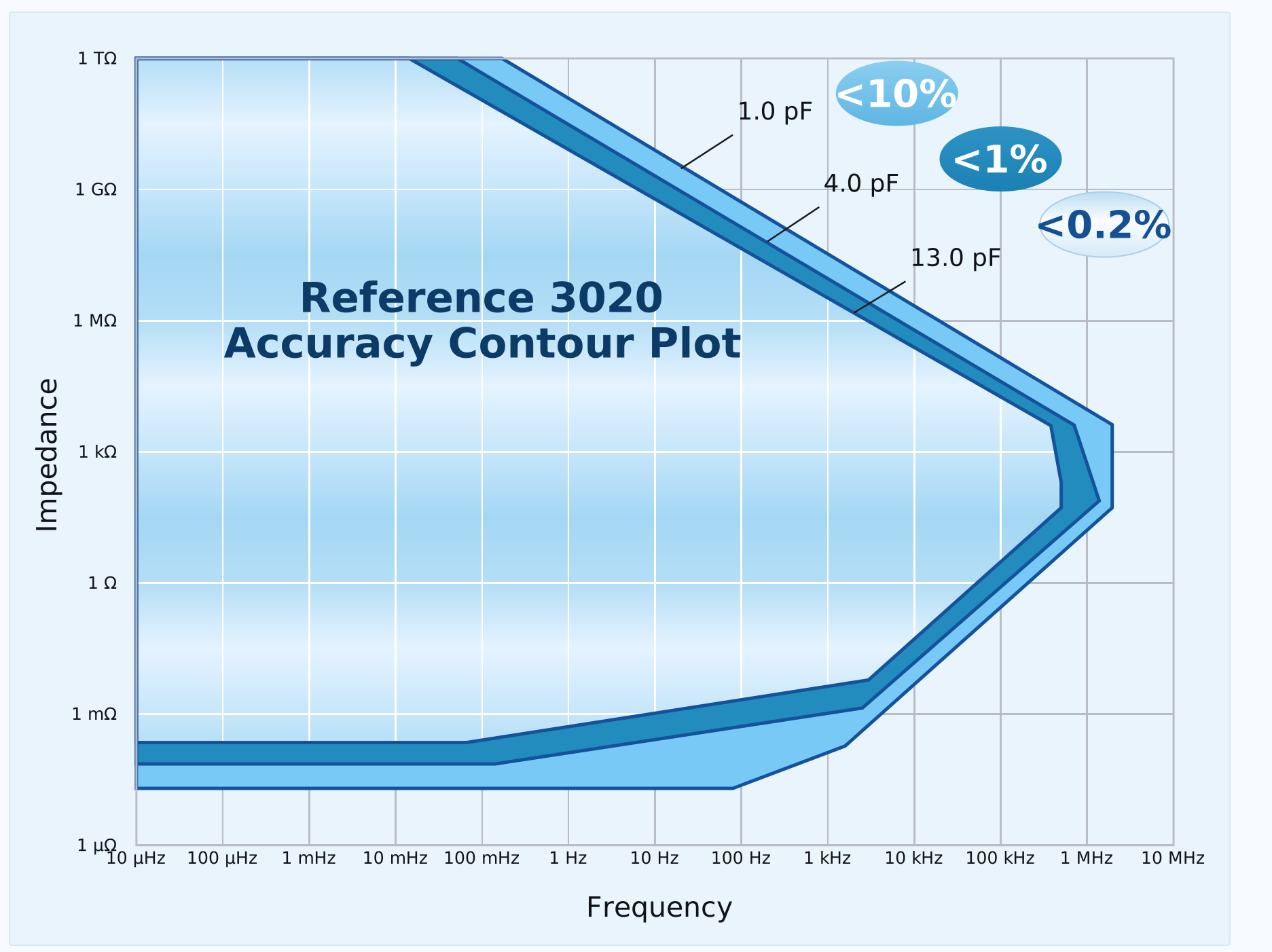
An accuracy contour plot tells you exactly where a potentiostat's EIS is trustworthy across impedance and frequency — the honest way to compare the EIS capability of any instrument.
Read the guidePermanent offices in Europe and China, plus a worldwide distributor network, support our users wherever the research happens.
Given everything Gamry potentiostats do, why would you choose another instrument for your electrochemical work?
See the advantages →The primer researchers keep bookmarked — an introduction to EIS theory kept deliberately light on the mathematics.
Match current range, EIS bandwidth, and channels to what your experiments actually need.
When data turns noisy, a 2-electrode run tells you whether the reference electrode is at fault.