Reference Electrodes |
||||||||||||||||||||||||||||||||||||||||||||||||||||||||||||||||
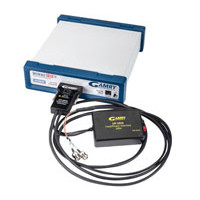
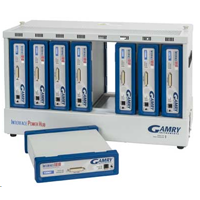
We finally take our own adviceFor a while we've been telling you that "You Need a Lab Master" to check your reference electrodes. Well, we finally decided to take our own advice. We were pleasantly surprised! We assembled a sampling of new SCE electrodes from stock (6), some other SCE electrodes that we tried to resurrect after they had been abused (5), and our Lab Master SCE that we had appointed several months ago. In the table, below, the electrodes labeled "P" came from our stock. Electrodes labeled "G" were electrodes that came from our "questionable" pile. These electrodes had been used in the lab or at a short course, or had been sent to trade shows. The Vycor® tips on many of the electrodes had dried out and some electrodes were devoid of filing solution. The first step, of course, was to replace the Vycor® frits on all the abused electrodes. We followed the procedure that was highlighted in our August 2006 Newsletter. We then refilled the electrodes with Saturated KCl. After about an hour we measured the potential difference between the Test electrodes and our Laboratory Master. Both electrodes were placed in a beaker containing Saturated KCl. The Laboratory Master was connected to the Reference Electrode input (white) of a Reference 600TM Potentiostat. The Test electrode was connected to the Working Sense (blue) and Working Electrode (green) leads of the Reference 600.
The measured potentials for the refilled electrodes are shown in the "Initial" column of the Table, below. The electrodes were allowed to stabilize overnight and the potentials were measured again. The two SCE electrodes (G5, G6) that had a substantially different potential than our Lab Master SCE were still substantially different! Our attempts at reviving these two electrodes obviously failed! Six new electrodes were also measured at this time. The average of the ten electrodes (Lab Master, 3 successfully revived SCE's, and 6 new SCE's) is less than 0.1 mV, and the standard deviation is less than 0.4 mV! Quite impressive!
We also found an abused Ag/AgCl electrode. We replaced the frit on it and refilled it with saturated KCl. To replate the silver wire with AgCl, and to saturate the filling solution with AgCl, we anodized the silver wire overnight by applying a constant current of 100 µA using the Reference 600. We used the PHE200's Chronopotentiometry experiment to do the anodization, but we could have used the DC105 Galvanostatic experiment just as easily. The Ag/AgCl electrode was connected as the Working electrode (green lead) and a platinum wire was used as the Counter electrode (red lead.) One of our resurrected SCE's was used as the Reference electrode.
We allowed the Ag/AgCl electrode to stabilize for a few days following the anodization. The potential was initially -22.4 mV vs. SCE but it was -41.4 mV vs. SCE when measured after a week of stabilization. The voltage is a little off of the theoretical difference (-45 mV) but the electrode is probably useable! We also measured the temperature. It was 24.5°C, so temperature corrections for the difference is not significant! |
||||||||||||||||||||||||||||||||||||||||||||||||||||||||||||||||
|
Home | Products | App Notes | Sales | Contact | News | Support | Search Batteries
| Fuel Cells
| Corrosion
| Paints & Coatings
| Physical Electrochemistry |
||||||||||||||||||||||||||||||||||||||||||||||||||||||||||||||||