



The Pulse Voltammetry Software is an electroanalytical tool for performing a multitude of pulsed techniques involved in electrochemistry research. Pulsed techniques offer increased sensitivity for studying low concentration, fast timescale electroactive species. This software can be used with solid electrodes, rotating electrodes, and mercury electrodes.
Menu
Close
Software
Product Details
Overview
The Pulse Voltammetry Software package is the electroanalytical tool to perform qualitative and mechanistic analysis of electrochemical species. Pulse Voltammetry Software adds Differential Pulse Voltammetry, Square Wave Voltammetry and other recognized pulse voltammetry techniques to the Gamry software product family. Pulse techniques lower the concentration limits of measurement for detection of electroactive species by minimizing the contribution of capacitive charging current. Stripping analysis is incorporated for each technique to further enhance the detection limit. This software works with solid electrodes, rotating electrodes, and mercury electrodes.
Features
- Advanced Pstat Setup
- Advanced users who want control over filtering, stability and speed of the system always have it at the script level. In the Pulse Voltammetry Software these controls are available through the experimental setup window making them easier to implement. For Reference Family users this also allows easy switching of the auxiliary channel between various read points (BNC, thermocouple, Control Amp).
- Electrode Setup
- Users of mercury drop electrodes (DME, SMDE, HMDE), rotating electrodes and/or Stir-Purge units can set up those various devices through this menu.
- Positive Feedback IR Compensation
- Higher acquisition rate experiments cannot operate with current interrupt mode IR compensation. Positive Feedback allows collection of IR compensated data in these experiments. The uncompensated resistance value must be known and constant during an experiment for this to operate properly.
System Requirements
- Gamry Reference or Interface Family Instrument or other USB-based instrument compatible with the Gamry Framework Software
- Microsoft® Windows™ 10(32-bit or 64-bit) Required, Microsoft® Windows™ 11(32-bit or 64-bit) Recommended
- 16 GB RAM Required, 32 GB RAM Recommended
Experiments
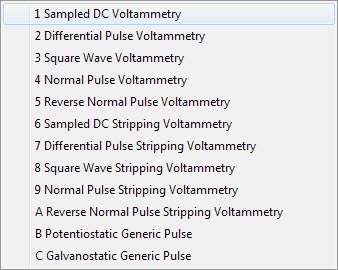
Square Wave Voltammetry
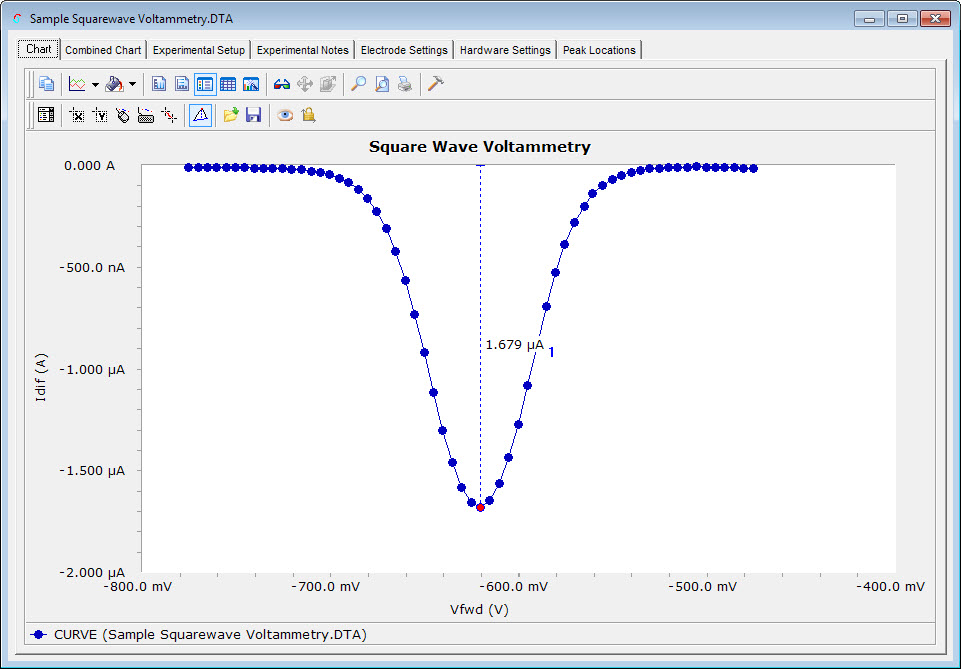
The applied signal for SWV is a square wave with 50% duty cycle superimposed on a staircase ramp. Measurements are taken right at the end of each potential change. The difference between the current values is plotted versus the staircase potential.
Differential Pulse Voltammetry
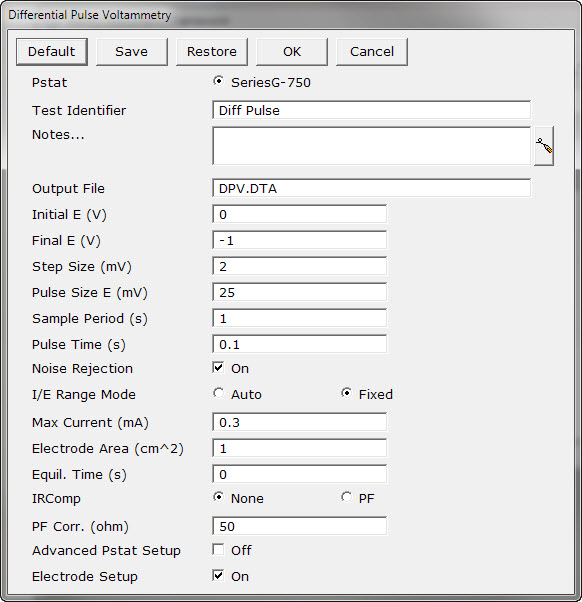
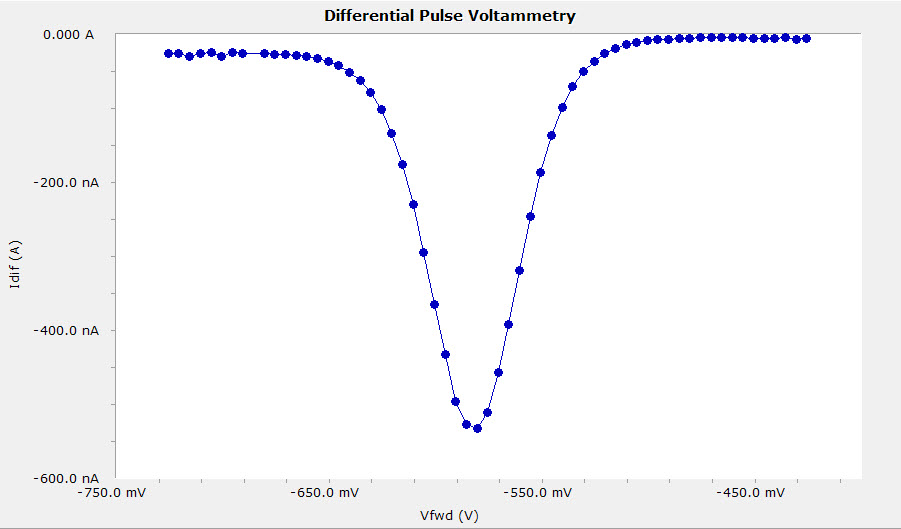
The applied signal for DPV is pulse that is superimposed onto the staircase ramp. The start of the pulse is synchronized to the step start of the staircase, and the pulse size and duration are adjustable. Measurements are taken right at the end of each potential change. The difference between the two currents is plotted versus the cell’s staircase potential.
Normal Pulse Voltammetry
In a NPV experiment, a series of ever-increasing voltage pulses is applied to the working electrode. The pulse duration and sample period are adjustable, and current measurements are made prior to the pulse and just before the end of the pulse.
Reverse Normal Pulse Voltammetry
The applied signal for a RNPV experiment is an inverted NPV waveform superimposed on a staircase ramp. Measurements are made prior to the start of the pulse, and just before returning to the initial potential.
Sampled D.C. Voltammetry
The applied signal is a staircase voltage sweep with adjustable step size and sampling period. A current measurement is taken prior to the next step in the staircase ramp.
Stripping Voltammetry
Each of the above techniques has a Stripping Voltammetry variant that accompanies it. Stripping Voltammetry includes a series of pre-steps that can be used to clean the electrode and to accumulate or concentrate the analyte on the electrode. The process increases the overall measured current, leading to the increased sensitivity of stripping voltammetric techniques.
Generic Pulse Voltammetry
The user can custom design a square wave in either potentiostatic or galvanostatic mode. The pulse size, duration, off time, and cycles are adjustable. This is useful for pulse plating applications.