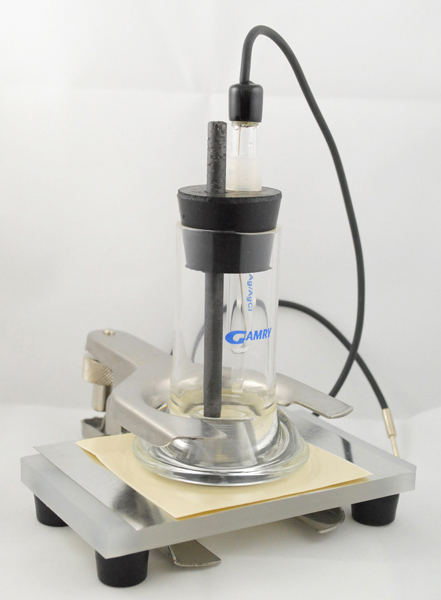
PTC1 Paint Test Cell and
PortHoles™ Electrochemical Sample Masks


PTC1 Paint Test Cell
The PTC1 Paint Test Cell is a low-cost sample cell for electrochemical testing of coated samples.  The PTC1 can also be used to test bare metal samples using PortHoles Electrochemical Sample Masks. 

The PTC1 is perfect for testing of painted metal specimens using Electrochemical Impedance Spectroscopy with Gamry’s EIS300 EIS Software.  The exposed area of almost 15 cm2 is sufficiently large to incorporate a statistically significant number of defects in the coating.  The large area is also a positive attribute from the data acquisition standpoint, since high impedance samples such as coatings are characterized by low current densities.  Because of the low cost, laboratories can justify the multiple cells that are necessary for long-term exposure testing of coatings.

The design of the PTC1 is elegantly simple.  A glass tube with an O-ring seal is clamped to the flat sample under test.  The tube is filled with the test electrolyte and sealed with a rubber stopper.  A Saturated Calomel Reference Electrode and a graphite rod counter electrode are mounted through the stopper.  

If you're concerned about graphite particles from the counter electrode contaminating the solution, then use the Counter Electrode Bridge Tube with a Platinum wire counter electrode (Part No. 990-194).  The platinum counter electrode is isolated from the sample electrolyte by a glass frit.

Metal Specimen Size
Disk Shape:  diameter at least 50 mm
Square Shape:  at least 50 mm on a side
Thickness:  1- 10 mm 

Vessel Dimensions
20 ml ( minimum volume )
50 ml ( maximum volume )
Inner Diameter: 30 mm

Temperature Range: -25șC to 140șC

Materials: Pyrex™, Teflon™, Viton™, silicone rubber

Replacement O-Rings for PTC1
Replacement O-Rings can be purchased from Kontes. The Part Number is 758292-0223. The dimensions of the O-Ring are: i.d. 40.87 mm, cross-section 3.53 mm.


A PTC1 Paint Test Cell surrounded by Portholes.


PortHoles™ Electrochemical Sample Masks
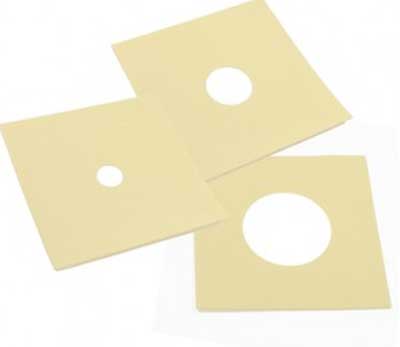
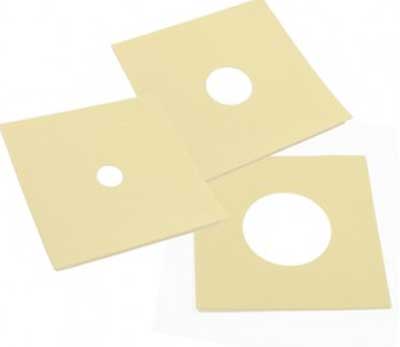
PortHoles Electrochemical Sample Masks define a known area of the sample surface for electrochemical testing with the PTC1.  PortHoles are available in 1, 3, or 10 cm2 area to accommodate any specimen.

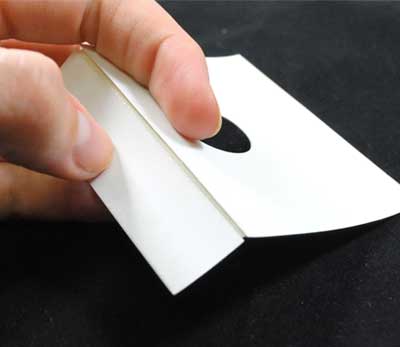
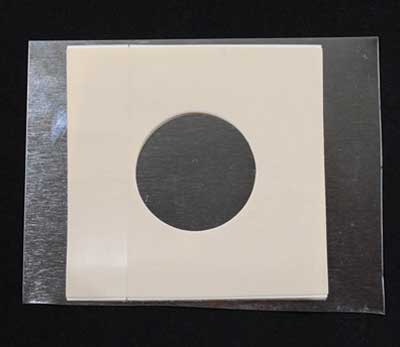
PortHoles Electrochemical Sample Masks are used with the Gamry PTC1 Paint Test Cell for a complete test cell for flat metal samples.  After the PortHoles Mask is attached to the sample, the body of the PTC1 Paint Test Cell is placed on the Mask.  The O-ring seal of the PTC1 body insures that no leakage takes place.  Since the O-ring contacts the PortHole, not the metal surface, crevice corrosion is not an issue.  The body of the PTC1 is filled with the appropriate electrolyte, which contacts only the area exposed by the PortHole.  When the experiment is complete, the PortHole is removed and discarded. PortHoles Electrochemical Sample Masks are fabricated from 3M Model 470 Electroplater’s Tape.  Model 470 Tape incorporates a special adhesive to bond aggressively to the metal sample surface to discourage underflow of the tape edge by the electrolyte, which would cause crevice corrosion.  The hole in the tape is carefully cut for a smooth edge with minimum burring.  Model 470 Tape is formulated to withstand lengthy exposure to chemicals commonly found in electroplating applications.   


PortHoles Electrochemical Sample Masks Specifications
PortHoles Electrochemical Sample Masks are provided as individual 3 inch  (7.6 cm) square masks with a pre-cut hole and removable backing.  PortHoles are designed for a single use.  PortHoles are fabricated from 3M Model 470 Electroplaters Tape.  PortHoles are provided with a 1, 3, or 10 cm2 hole in lots of 60, or as an assortment with 20 of each size.   


Home | Products | App Notes | Sales | Contact | News | Support | Search

Batteries | Fuel Cells | Corrosion | Paints & Coatings | Physical Electrochemistry


Gamry Instruments © 1997-2005
  
Last revised on Monday, December 10, 2007