| Some
may tell you
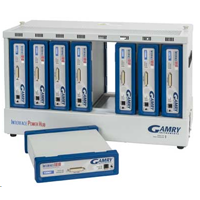
that a Gamry Series G Potentiostat is noisy because it's installed inside a noisy computer.
Here's why they're wrong.
|
||
| The
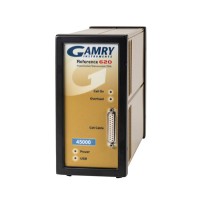
Bottom Line Gamrys specification for Noise and Ripple of the applied potential for the Series G 300 and Series G 750 is 20 µV(microVolts) rms (1 Hz 10 kHz). For the Reference 600 Potentiostat, the noise specification is less than 10 µV(microVolts) rms. We guarantee this specification for our Potentiostats in any Windows-compatible computer in any laboratory in the world. Compare this value to the noise specification for any other commercial potentiostat. Our search found no instrument whose noise specification matched or exceeded Gamrys! We're amazed that a few potentiostat manufacturers do not publish a noise specification. It's a very important specification. You really shouldn't buy a potentiostat for which the noise level is not specified. |
||
| Technical
Details In the lore of scientific instruments, a computer is considered to be electronically noisy. If that is true, then it seems counter-intuitive to expect a potentiostat that is installed inside a computer to exhibit low noise. How does Gamry do it? Is a
computer noisy?
Yes, a
computer has very high noise levels inside its cabinet.
A computer is a digital device, which generates both magnetic and
electric fields as its internal signals switch.
These fields can couple noise into analog circuits.
However (and this is important) the noise in a computer occurs at very
high frequencies, typically greater than 100 MHz.
These frequencies are far higher than the frequencies that are important
to electrochemistry. Grounding.
The Gamry Potentiostat uses optical or transformer couplers to electrically
isolate the analog potentiostat from the earth ground of the computer in which
it is installed. Large AC currents
flowing through the computers ground would otherwise create noise in the
potentiostat. Filters.
The Gamry Series G Potentiostat contains three analog filters at 5 Hz, 1000
Hz, and 200 kHz. The Reference 600 has
four filters. One of these
filters is always active, discriminating against the computers high frequency
noise. Shielding.
If you examine a Gamry Series G Potentiostat, youll see a big sheet of metal
that completely covers the analog components of the Potentiostat. This is a shield that protects the Potentiostat from
electrostatic pickup of computer noise. What
about the other guys?
If Gamrys noise spec is 20 µV
rms, shouldnt other manufacturers have an even lower noise spec?
After all, their potentiostat is not inside the computer!
The conclusion is simple...our engineers are better than their
engineers! Since
were on the subject, what does Noise and Ripple really mean?
For a Gamry Potentiostat, the noise level that will be
observed on the applied potential is less than 20 µV
rms (root mean square). To convert
rms to peak-to-peak, multiply by 1.414 (square root of 2) to convert to a peak
signal, then multiply by 2 to convert to peak-to-peak.
|
||
| Make a
smart decision. If someone tells you something negative about Gamry, they
may not have your best interests in mind. Contact us and ask for our comments. |
||
|
Home | Products | App Notes | Sales | Contact | News | Support | Search
|
||
|
|
||