

Software/Cells/Accs.
Electrochemical Cells
An electrochemical workstation has a potentiostat and relevant control software on one end, and the electrochemical cell setup—generally inside a Faraday cage—on the other. Electrochemical cells are designed to hold a working, reference, and counter electrode in an appropriate geometry, but beyond that they can vary a great deal.
Gamry has electrochemical cells for general, as well as specific, experiments. We design as much flexibility as we can into each cell without compromising the cell's ability to perform needed tasks.
We also carry a number of electrochemical accessories for your research.
-

1L Rotating Cylinder Electrode Cell
The 1L RCE Cell is designed for rotating cylinder studies.
-

Bulk Electrolysis Cell Kit
The Bulk Electrolysis Cell Kit is engineered for the comprehensive electrolysis of solution species.
-
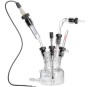
Dr. Bob's Cell
- Working Volume: Between 1 mL and 30 mL
- Equipped with 5 multi-purpose ports
- Available in non-jacketed or a jacketed version
-
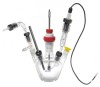
EuroCell Electrochemical Cell Kit
- Working Volume: Between 50 mL and 200 mL
- Available in jacketed and unjacketed versions
-
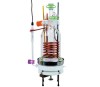
FlexCell Critical Pitting Temperature Cell Kit
- Determine Critical Pitting Temperature
- Counteracts crevice corrosion around the specimen seal
- Powerful tool for studying localized corrosion
-
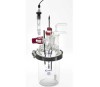
MultiPort Corrosion Cell Kit
- Working Volume: Between 400 mL and 1200 mL
- 2 piece design allows oversized samples in the cell
- The workhorse of a corrosion lab
-
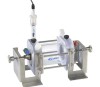
ParaCell Kit for Flat Specimens (Standard)
- Working Volume: Between 250 mL and 400 mL
- Designed for convenient mounting of flat samples
-
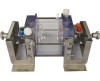
ParaCell Kit for Flat Specimens (Glass Body & Polycarb End)
- With Polycarbonate Ends (#992-00196)
- Designed for convenient mounting of flat samples
-
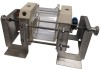
ParaCell Kit for Flat Specimens (PEEK Ends & Glass Body)
- With Glass Body (#992-00198)
- PEEK End Caps
-
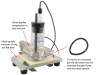
PTC1 Paint Test Cell
- For electrochemical testing of coated samples
- Perfect for testing of painted metal specimens using EIS
-
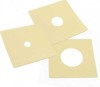
PortHoles Electrochemical Sample Masks
- 1, 3, or 10 cm2
- Reduce crevice corrosion when samples are sealed to a cell with an O-ring